A name older than the appellation.
Mític, year by year.
One wine. Four years. Four characters. Mític is made the same way every year. What changes is the year itself. Here is what each season gave.
A mild, wet winter, then a cool summer with light hail in June. September rains, three times the usual, gave higher acidity and lower alcohol.
Snow covered the vineyards for three days in February. A hot, dry summer followed and the grapes ripened in good health.
Three days of heavy rain in April delayed flowering. Wind and constant sun kept the vines healthy, and a warm September gave a slow, even ripening.
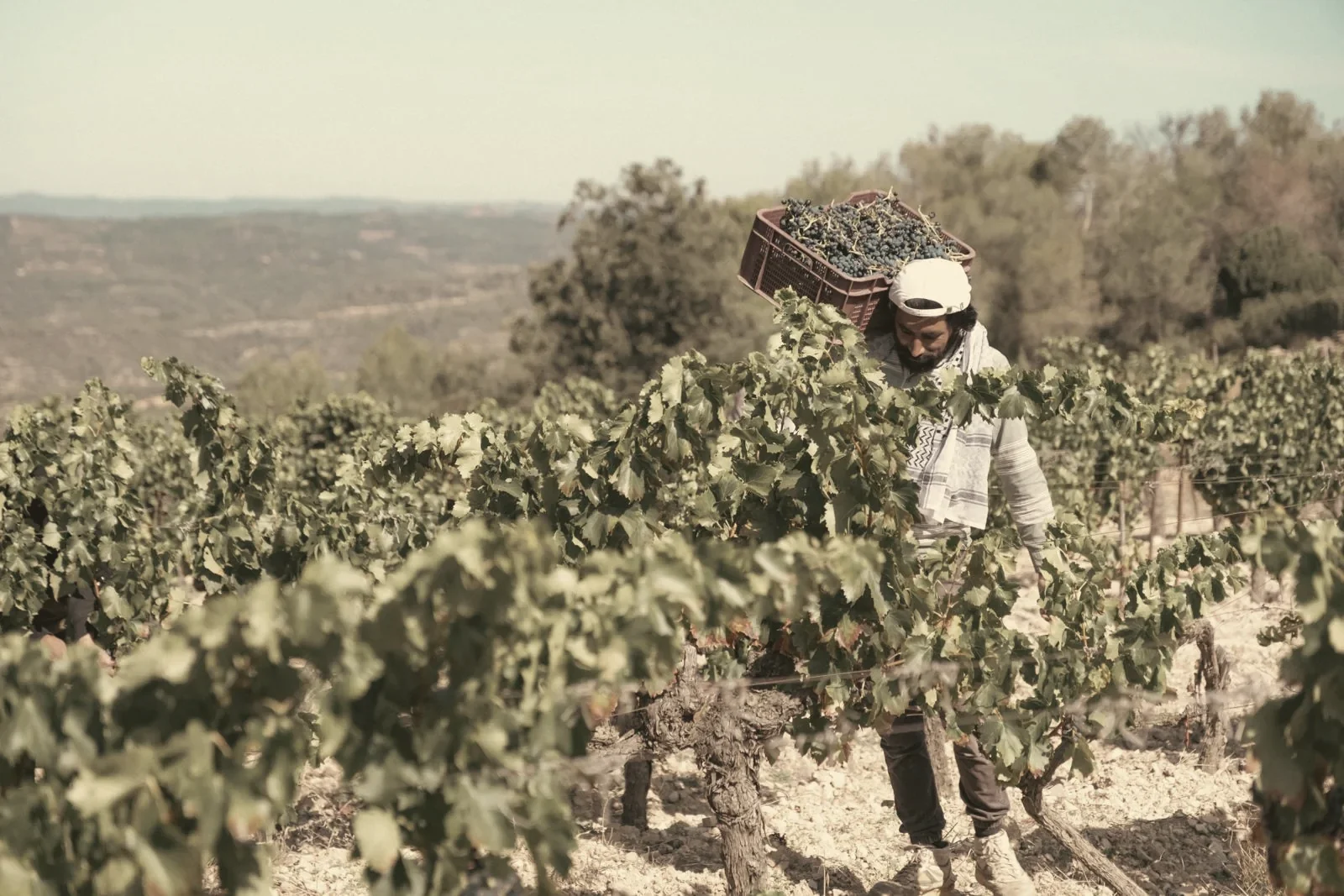
A dry spring and a mild summer with wide day–night swings. Heavy rain at harvest meant picking vineyard by vineyard; three-quarters Cariñena.
Many places, one wine.
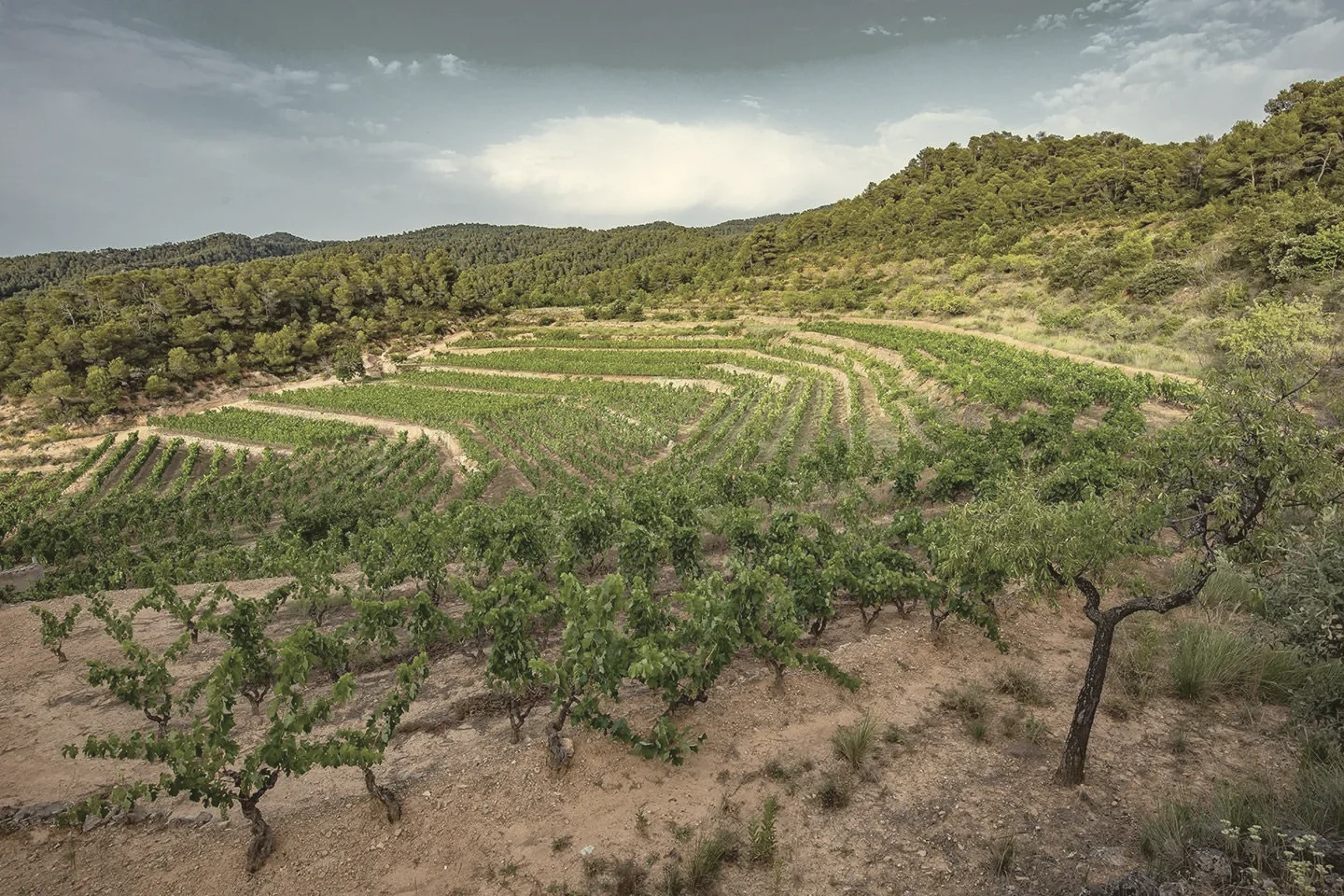
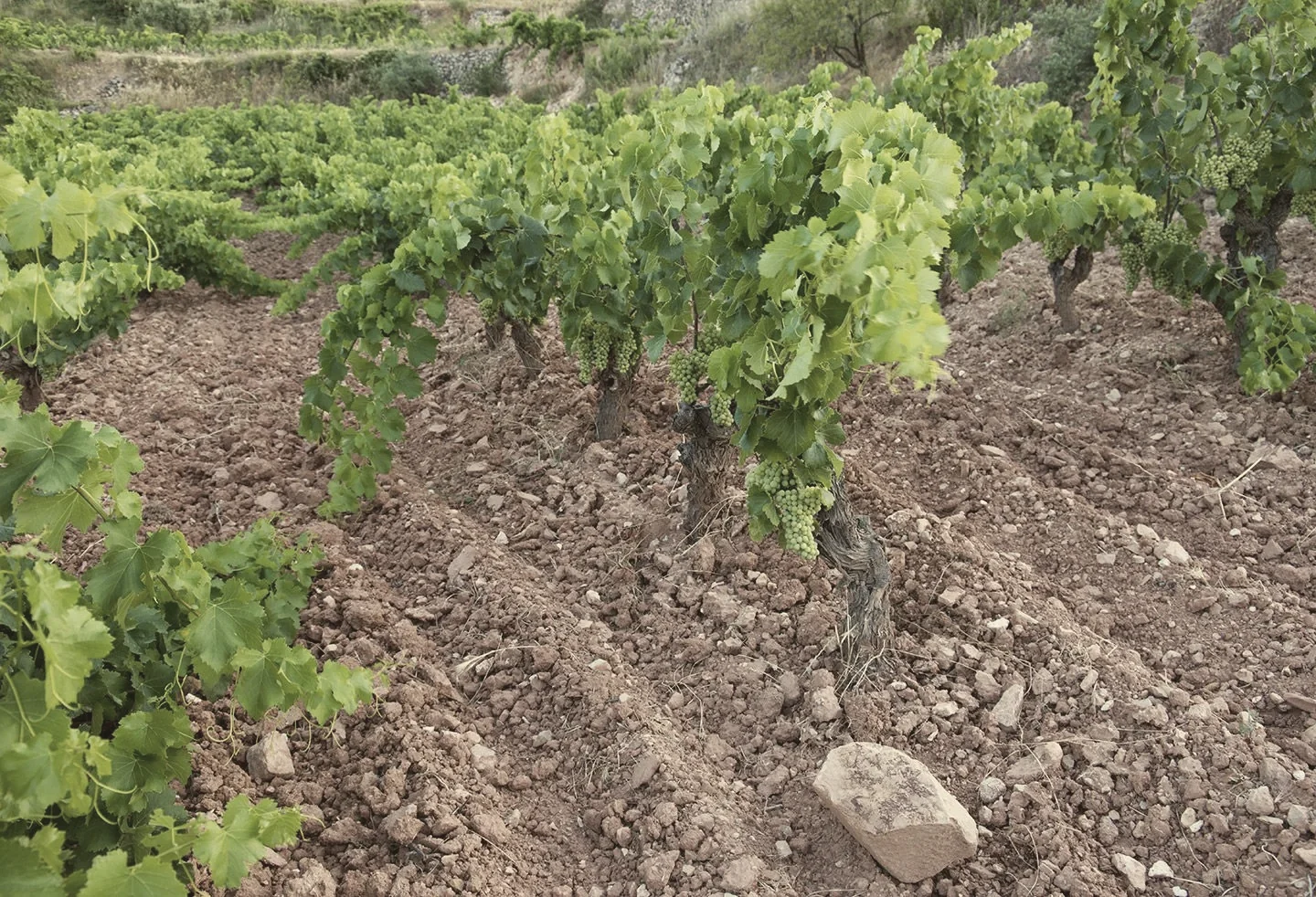
Laurona’s vineyards lie in different villages, from about 120 to 700 metres, on schist, clay-limestone and granite, with vines 30 to 88 years old. No single place makes Laurona. The blend does.
Altitude and cool nights bring freshness and tension.
More warmth, rounder, more open fruit.
Each variety and each place is aged apart, then brought together with time in mind: how the wine will taste years from now, not this year.


From Pliny to today.
The name
Pliny the Elder praises the wines of Lauro, beside those of Tarraco, for their elegance. Our wine Plini is named after him.
Fischer & Rihs
In Switzerland, Roland Fischer’s Fischer & Rihs becomes one of the country’s benchmark wine merchants, until 2001. He pours Clos Mogador, Vega Sicilia, Rayas and Château Musar before the world agrees they are legendary.
A question
René Barbier Senior asks Roland Fischer whether great wine has a future in this overlooked corner of Catalonia. He has already tasted the answer.
Foundation
René Barbier Senior and Christopher Cannan found Celler Laurona in Falset. Christopher Cannan finds the name in old books.
The appellation
The DO Montsant is created. Laurona is already making wine here.
Recognition
Wine Spectator Top 100: Laurona 2000 at #95, when the estate is three years old.
Cronos
A great year. Part of it is held back in the library and released, years later, as Cronos.
New York
In The New York Times, Eric Asimov writes about Laurona 2006 in “Spanish Reds That Emerge From the Shadows”.
La Figuera
Fiona Fischer comes to La Figuera and founds Galilea by Fiona, her own wines. The first is Pythagora.
The Fischer family
The Fischer family acquires Celler Laurona, the winery Roland Fischer saw born.
Transmission
René Barbier Senior hands Fiona Fischer the Laurona cellar and the care of its blends. She becomes the winemaker. Old vines, each variety aged apart, released only when ready.
A last harvest together
René Barbier Senior and Fiona’s last vintage side by side.
The library
Seventeen wines and vintages, from 2007 to 2022, ready to pour.
What we are, and what we are not.
What we don’t claim
We farm organically by conviction, but we hold no organic or biodynamic certificate. Other estates here do that work very well. We would rather tell you what we can show.
What we can show
- 2002Wine Spectator Top 100: Laurona 2000 at #95
- 2013The New York Times: Eric Asimov on Laurona 2006
- 2021International Wine & Spirits Awards: gold for Cronos 2007 and Nautilea 2017
- 2024IWSC: five of our wines scored 92 to 94 points